

Table of Contents:
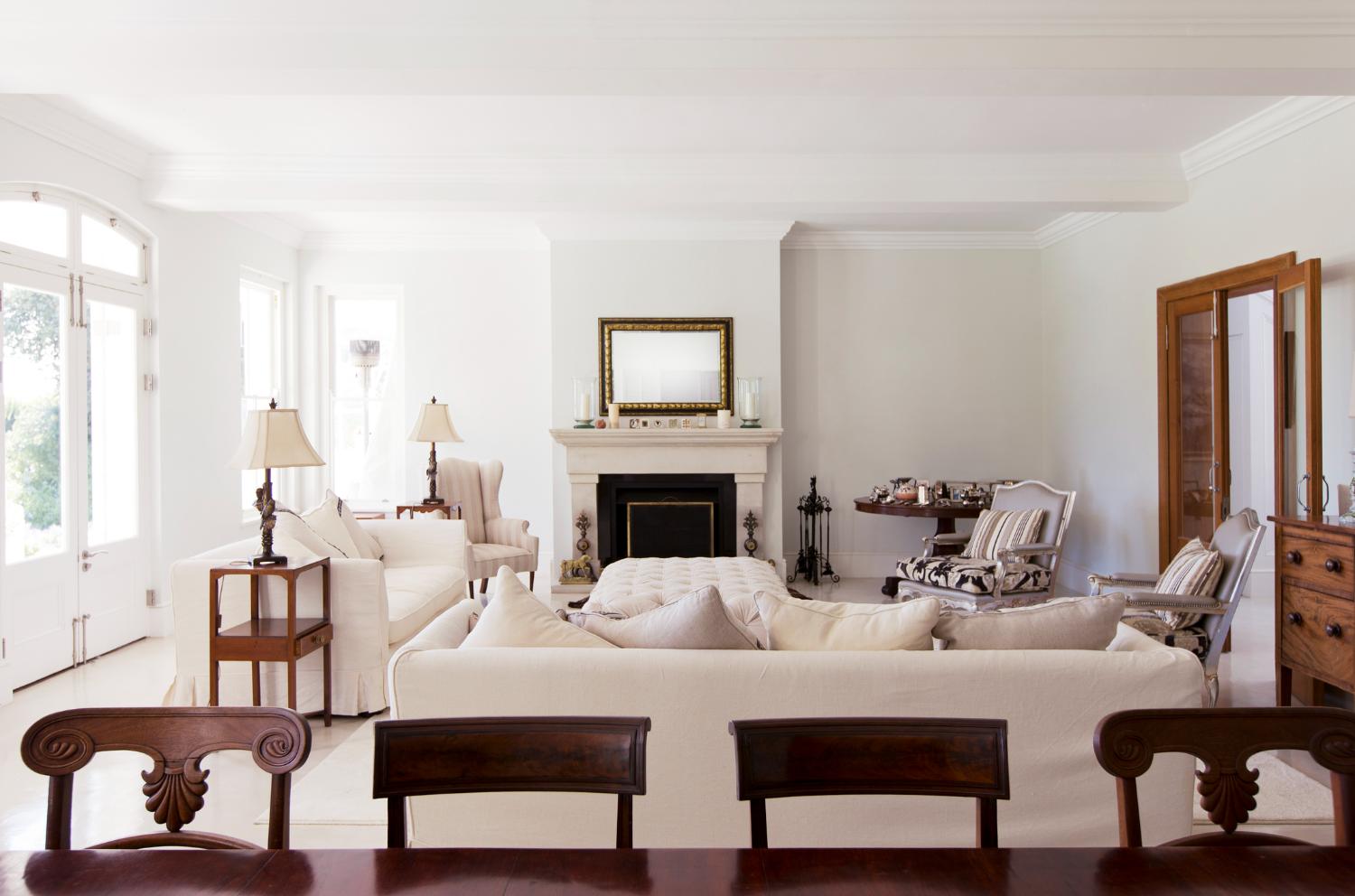
Focal points and layered lighting are some of the key aspects of “visually quiet” home staging.
When you’re preparing to sell your home, it’s completely natural to focus on deep cleaning and making everything look nice. A successful sale, however, often requires shifting your perspective from “decorating” to “editing.” Buyers aren’t necessarily judging how you’ve styled a room; they’re evaluating how easily they can inhabit it.
The goal of home staging is to remove any visual friction that prevents a buyer from forming an immediate, positive first impression. In the competitive Pennsylvania market, buyers feel most comfortable when the layout, lighting, and flow are clear the moment they step through the front door.
By adopting a philosophy of “visual quiet,” you position your property as a well-maintained, move-in ready canvas.
Key takeaways
|
7 Steps to achieving visual quiet
Effective home selling preparation is less about buying new furniture and more about calibrating what you already own to highlight the home’s architectural strengths.
1. The rule of one per surface
Every flat surface in your home—kitchen counters, coffee tables, mantelpieces, and nightstands—should have a single focal point or remain entirely empty. A single sculptural vase or a small, curated stack of books provides a “pause point” for the eye. When multiple objects compete for attention, the room feels cluttered and the perceived square footage shrinks.
Take the time to walk through your home and look at your surfaces through the lens of a professional photographer. If your eye is unsure where to land, simplify the arrangement. This is one of the simplest home staging tips, yet it remains one of the most effective ways to elevate a room’s perceived value.
2. Calibrated lighting and color temperature
Lighting affects how a buyer perceives the “health” of a home. In many older Montgomery County homes, mixed lighting (a combination of cool fluorescent and warm incandescent) can create a disjointed, vibrating energy that makes spaces feel smaller.
Replace harsh, high-Kelvin white bulbs with warmer consistent tones across all rooms. Aim for “layered lighting,” which includes:
- Ambient: General overhead lighting
- Task: Under-cabinet or desk lamps
- Accent: Soft floor lamps in corners to eliminate shadows
Consistency is key. If the hallway is dim but the kitchen is blindingly bright, the transition feels jarring. A consistent glow throughout the house ensures the home selling preparation feels professional and cohesive.
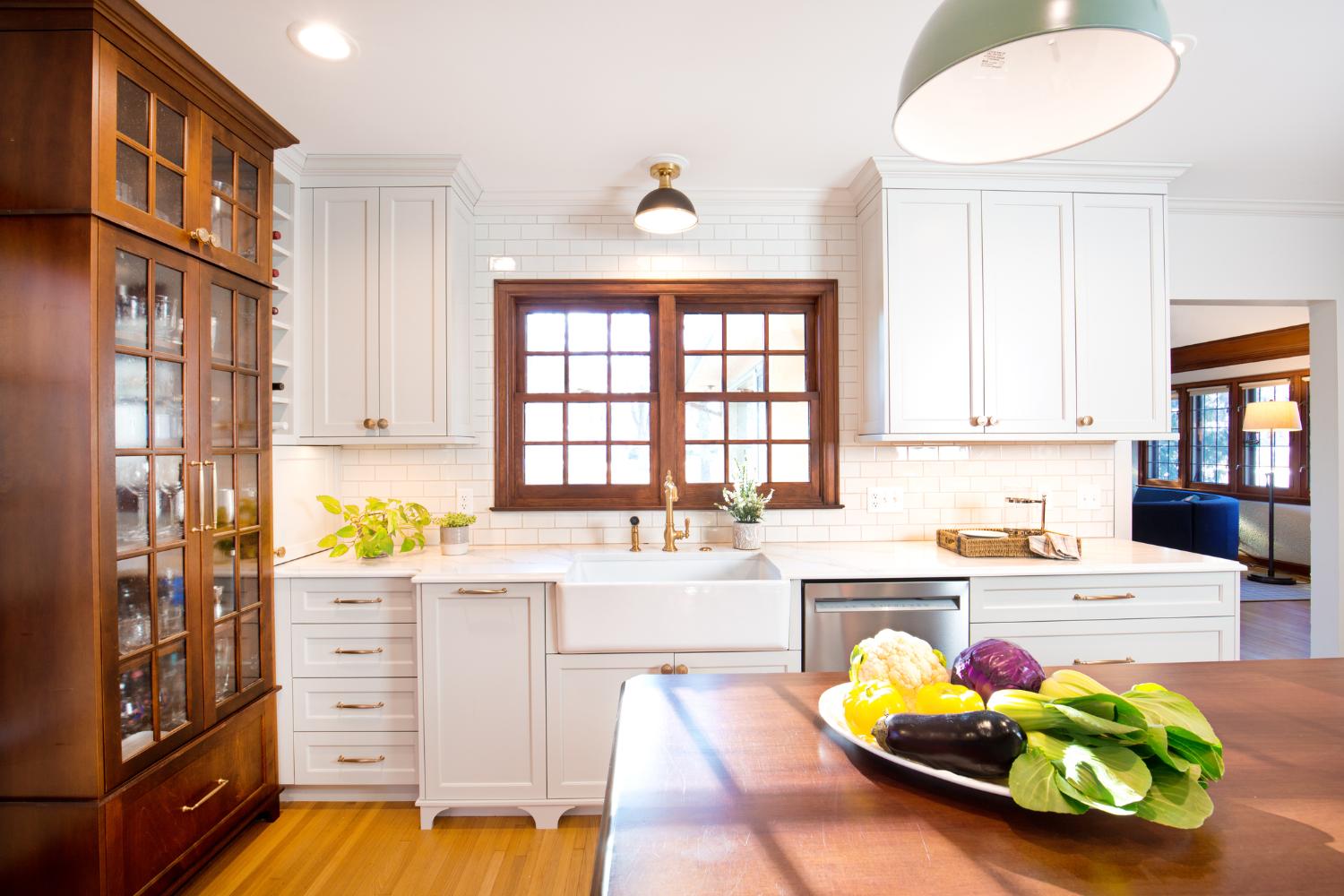
In the kitchen and bathrooms, stealth storage is a requirement.
3. The traffic flow edit (20% rule)
Most homes are over-furnished for the purpose of daily living, but daily living is different from an open house. Removing approximately 20% of the furniture from a room creates wider circulation pathways. This makes the room feel significantly larger without any structural changes.
Start by removing bulky or non-essential pieces: extra side chairs, oversized coffee tables, or ottomans that narrow the walkways. When staging your home to sell, you want to ensure that two or three adults can stand in a room together without feeling cramped.
4. Curated walls over cluttered galleries
While a bare wall can feel cold, a wall covered in small, mismatched frames can feel chaotic. There’s more visual impact in one large, cohesive piece of art than in a cluster of ten small ones.
In historic homes with beautiful moldings or woodwork, fewer pieces often create a stronger impact. But if you choose to keep a gallery wall, consider reducing the number of frames and increasing the “white space” between them. This allows the buyer to appreciate the architecture of the wall itself rather than the items hanging on it.
5. Stealth storage and countertop management
In the kitchen and bathrooms, stealth storage is a requirement. Buyers will look inside your cabinets and closets to gauge storage capacity. If your counters are covered in toasters and spice racks, the subconscious message is: “This kitchen doesn’t have enough storage.”
Keep everyday items hidden in closed baskets or built-in cabinetry. When preparing to sell your home, think of your bathroom vanities as hotel spas—completely clear except for perhaps one high-quality soap dispenser. Removing personal items like family photos and toothbrushes makes it easier for buyers to visualize the house as their own.
6. Invisible sensory touches
Staging is a multi-sensory experience. Beyond the visual, how a home feels and smells can make or break a deal. Use natural fabrics like linen throws or wool accents to add depth and warmth to a room without adding visual noise.
Avoid strong, artificial scents like heavy candles or plug-in air fresheners, which can trigger allergies or lead buyers to wonder what smells you’re trying to hide. An understated clean scent—or simply the smell of fresh air—is best. The goal is for these details to support the space silently, never competing with the visual presentation.
7. Flow correction and friction removal
Walk through your home as if you were a stranger. Notice where you have to turn sideways to pass a table, or where a door doesn’t fully open because of a rug or chair. These are “friction points.”
Buyers may not be able to articulate why a house feels “off,” but they’ll feel the physical friction of a poor layout. Adjusting furniture to allow for natural movement is one of the most overlooked home staging tips. Good staging allows people to move through a home without having to think about where they’re stepping.
Frequently asked questions
|
Get your home market-ready
Successful home selling preparation isn’t about adding more; it’s about knowing what to remove. When your home feels open and easy to navigate, buyers spend less time figuring out the floor plan and more time imagining themselves living there.
If you’re staging your home to sell, Dan Helwig, Inc. Realtors® provides the local expertise needed to ensure your property stands out once it hits the market. Call us 215.233.5000 or email us to apply the right home staging tips for your specific property.